10 Biggest Beginner Blogging Mistakes (And How to Fix Them)
10 Biggest Beginner Blogging Mistakes (And How to Fix Them)
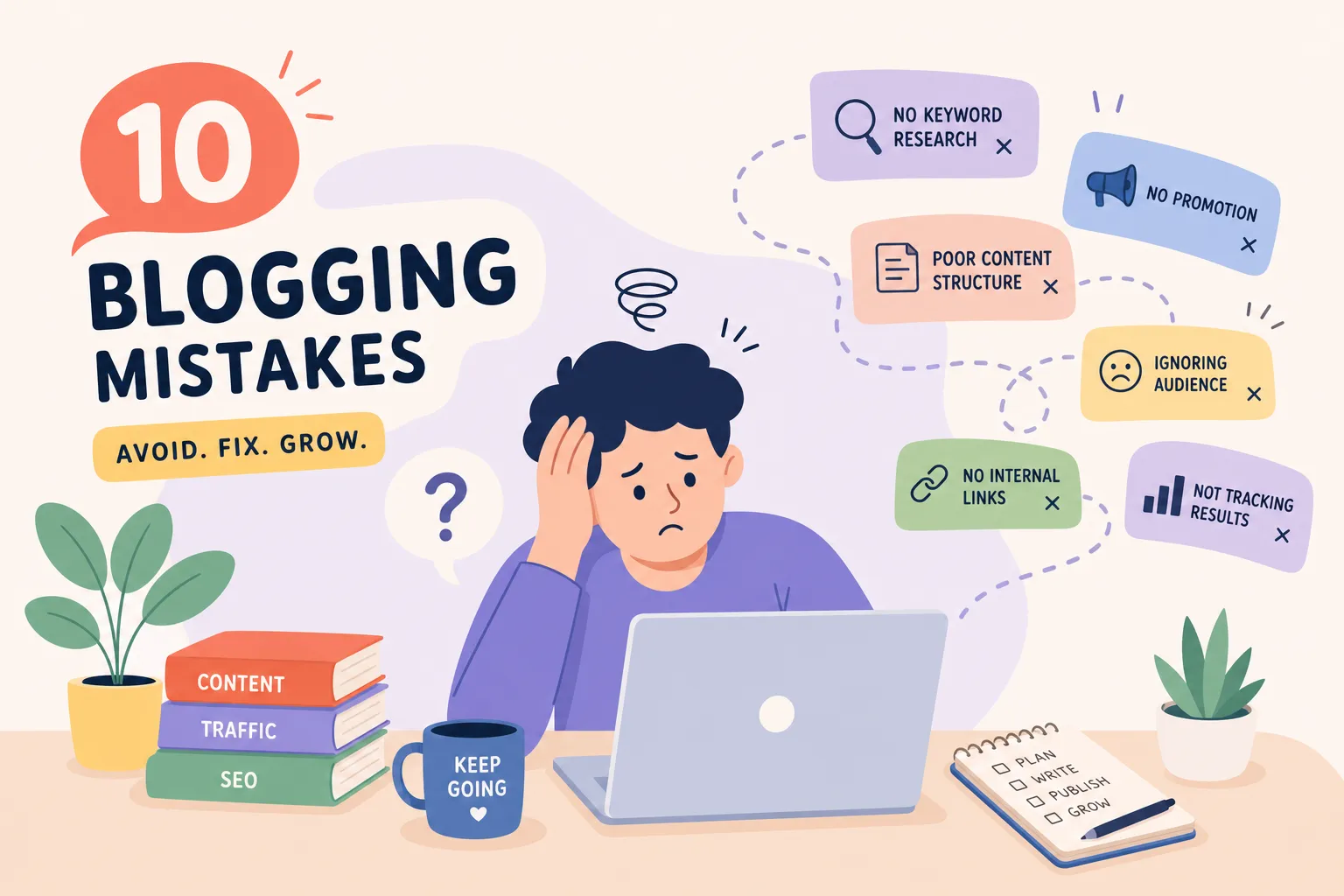
Most new bloggers don't fail because they can't write. They fail because they keep repeating the same fixable mistakes while wondering why nothing is working. You publish a post, wait a week, check your analytics, and see a flat line. You write another one. Same result. Understanding the biggest mistakes beginner bloggers make and how to fix them is the fastest way to stop that cycle, because these blogging mistakes to avoid aren't obvious while you're making them, which is exactly what makes them so damaging.
At The Growth Engine, we've studied the patterns that stall beginner blogs before they ever get traction. This article covers the 10 biggest ones, grouped into the six areas where new bloggers consistently lose ground, along with specific fixes you can apply starting today. Read through the whole list, identify which ones apply to your blog right now, and prioritize accordingly.
1. Picking a niche that's too broad (or skipping it entirely)
A blog about "wellness" competes with every major media company, hospital network, and health brand on the internet. A blog about gut health for women over 40 has a fighting chance. The difference isn't the quality of the writing; it's the focus. Without a defined niche, your posts don't build topical authority, readers don't know why they should return, and Google has no clear signal about what your site actually covers.
The fix is finding the intersection of three things: what you know well, what a real audience is searching for, and what has monetization potential. From there, build your content around 3-5 content pillars (the core themes that organize everything you publish). Your niche doesn't have to be impossibly narrow. It just has to be clear and consistent so Google and your readers both understand what you're about.
2. Writing posts for yourself instead of your reader
Writing about whatever interests you feels natural, but readers aren't coming to your blog for your thoughts. They're coming because they searched for an answer to a specific problem. When your content is organized around your interests rather than their questions, you end up with posts that are interesting to write and invisible to everyone else.
The fix requires a habit shift. Before you open a new draft, nail down three things: what specific problem your reader has, what they already know about it, and what action you want them to take after reading. Start with a search query, not a topic idea. That one change transforms your blog from a personal journal into a useful resource, which is what actually attracts traffic and keeps readers coming back.
3. Skipping keyword research before you write
Two posts on nearly identical subjects can have completely different traffic outcomes based on one factor: whether the writer researched what people actually search for before writing. Publishing without keyword research means producing content with no guaranteed audience. Even a well-written, genuinely useful post fails when nobody is searching for the topic it covers. This is one of the most common blogging mistakes new writers make, and one of the easiest to fix.
For a new blog with no budget, the free tool stack is more than enough to get started. Google Search Console shows you what queries your existing content is already picking up. Google Keyword Planner validates search volume for new topics. AnswerThePublic and Ubersuggest's free tier surface question-based and long-tail keyword angles. Long-tail keywords, three- to five-word phrases with lower competition, are where new blogs should focus first, since you're not yet competing with established sites for broad head terms.
Once you have your keyword, the on-page basics are non-negotiable. Place the keyword in your H1 title. Use a semantic variation in at least one H2. Write a meta description that includes the keyword and communicates a clear benefit (note: meta descriptions influence click-through rate from search results, not rankings directly). Add descriptive alt text to every image. Include 2-3 internal links to related posts. These aren't complicated technical tasks; they're the minimum setup every post needs before it goes live.
4. Publishing whenever the mood strikes
Irregular publishing does more damage than most beginners realize. Search engines respond better to sites that publish on a predictable schedule. Readers can't build a reading habit around a blog that posts every day for two weeks and then disappears for a month. The myth that more content always wins leads to a common pattern: a burst of posts followed by a long silence, signaling inconsistency to both Google and your audience.
The fix isn't a complicated system. It's a simple editorial calendar with five fields: topic, keyword, publish date, content type, and status. Build it in Google Sheets or Notion and map out the next 30 days. One focused post per week beats three rushed posts followed by radio silence every time. The goal isn't volume; it's a rhythm you can actually sustain.
The most effective consistency habit experienced bloggers use is batching. Pick one day per week or per month to brainstorm topics, create outlines, and draft multiple posts at once. When you batch your content creation, publishing stops being an emergency and becomes a scheduled event with the work already done in advance. This single workflow change removes the weekly panic that causes most new bloggers to post sporadically.
5. Creating thin content with weak headlines
Thin content looks like this: a 500-word post that skims a topic, a listicle with no depth behind each point, or an article that answers a question in one paragraph and then wraps up with a generic closing. Search engines deprioritize content that doesn't comprehensively cover its subject, and readers bounce immediately when a post feels lightweight. If your posts don't satisfy the reader's full intent, they won't rank and they won't convert.
The headline problem compounds this. A strong post with a weak headline still fails, because the headline determines whether anyone clicks in the first place. Vague or generic titles don't communicate a clear benefit. Research on click-through rates for informational content consistently points to three headline formulas that outperform the rest: numbered lists, how-to headlines with a specific benefit or timeframe, and question-based headlines that name the reader's exact pain point. Here's a quick before-and-after: "Tips for better blogging" becomes "10 beginner blogging mistakes that are killing your traffic (and how to fix them)." The second headline is specific, outcome-oriented, and matches what a struggling blogger is actually searching for.
Structure matters just as much as length and headline. A well-built post opens with a punchy intro that names the problem clearly, uses H2s to break the content into scannable sections, keeps paragraphs to 2-4 sentences, and ends with a clear call to action. Use this as your repeatable post framework every time, not just for your best pieces.
6. Ignoring promotion and skipping the email list
Why promotion can't wait
Hitting publish is not the finish line. New blogs have no domain authority, which means organic traffic from Google takes time, often 3-6 months before you see meaningful results, and up to a year for consistent growth. Waiting passively for SEO to kick in while doing nothing to promote your content means most of your posts will sit unseen. Social sharing, participating in relevant communities, and repurposing content across formats aren't optional extras for beginner bloggers; they're the bridge between publishing and actually getting read.
Start your email list on day one
The email list mistake is even more costly. Every reader who lands on your blog and leaves without subscribing is a reader you've lost, you have no way to reach them again unless they happen to find you through search. An email list is one of the few audience channels you truly control, and the time to start building it is day one, not after you hit some traffic threshold.
The setup is straightforward: create one targeted lead magnet (a checklist, mini-guide, or template that solves a specific problem your reader has), use a free tool like Mailchimp or Kit (formerly ConvertKit) to manage it, and place an opt-in form prominently on your homepage and within your highest-traffic posts.
At The Growth Engine, we cover not just these beginner blog errors but the full system: niche selection, keyword research, content structure, email list growth, and monetization. If you're building a blog from zero and want to avoid the months of trial and error that slow most new bloggers down, the guides and resources on this site are built specifically for that stage.
Start with one fix, then build from there
Nobody launches a blog planning to make these mistakes. They happen because most beginner resources focus on the exciting parts, picking a name, setting up a theme, writing your first post, while skipping the strategic foundation that determines whether any of that work pays off.
The biggest mistakes beginner bloggers make and how to fix them rarely get addressed all at once, and that's fine. Go back through this list and identify the one mistake that resonates most with where you are right now. Apply the fix today. Then work through the rest, one at a time, with a real plan behind each step. Addressing even three or four of these blogging mistakes to avoid can improve your chances of faster traction and meaningfully shift your blog's trajectory. The bloggers whose growth looks "overnight" six months from now are the ones who fixed these fundamentals early and stayed consistent long enough for the compounding to kick in. That can be you.


Comments
Post a Comment