Budgeting Basics: Build a Monthly Plan That Actually Sticks
Budgeting Basics: Build a Monthly Plan That Actually Sticks
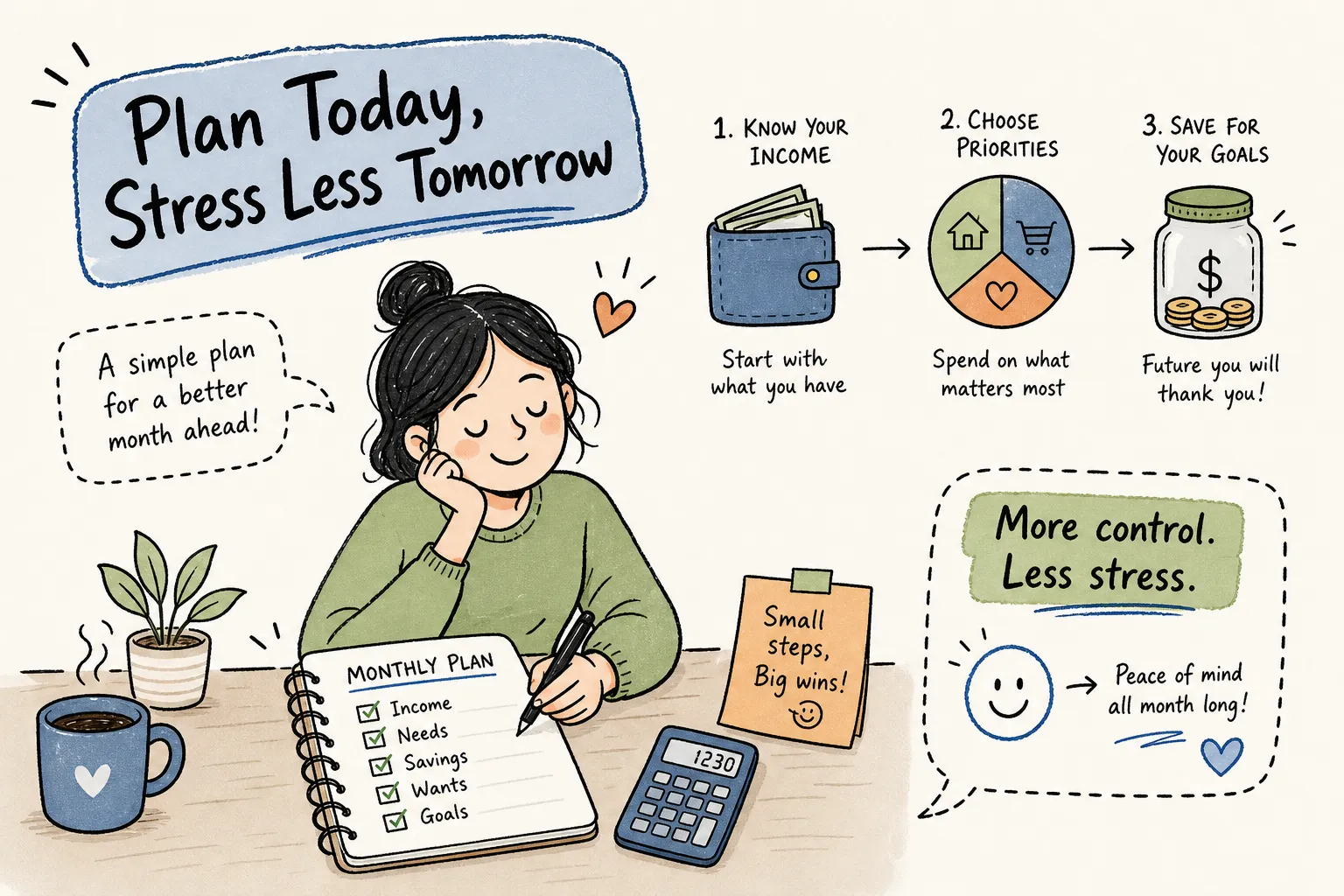
Many people avoid budgeting not because they're careless with money, but because no one ever showed them a system simple enough to actually use. Money comes in, money goes out, and somewhere between the two, the plan disappears. Understanding the budgeting basics, what a budget actually is, how to build one, and how to make it stick, is the first step toward changing that pattern.
Here's the reframe that changes everything: a budget isn't a restriction on your life. It's a written plan for your money. You're already spending it. A budget just decides where it goes before it vanishes.
At The Growth Engine, budgeting is treated as one piece of a bigger picture. The discipline that keeps you on a monthly spending plan is the same one that builds better routines, stronger habits, and a more stable financial foundation. Money and personal growth aren't separate conversations. They live in the same system. This article covers five practical areas: what a budget actually is, how to build one, which method fits your situation, how to size your emergency savings, and which tools make tracking simple enough to last.
What a Budget Actually Is (and What It Isn't)
The word "budget" carries a lot of baggage. Most people hear it and picture spreadsheets full of color-coded cells, or a life where every dollar of fun gets eliminated. Neither image is accurate.
A budget is a written record of how much money comes in and where it goes each month. That's it. It doesn't change your income, and it doesn't cut everything enjoyable out of your life. It removes the mystery of where your paycheck went by the time rent comes around.
The real problem for most people isn't overspending, it's that they have no visibility into what they're spending. Cash flow blindness is incredibly common. Most people drastically underestimate their variable spending: food delivery, streaming subscriptions, impulse buys, and convenience charges that never feel large until they're added up. A monthly spending plan makes those numbers visible, and once you can see the leaks, you can decide which ones to fix.
Every budget starts with three numbers: your take-home income after taxes (the only figure that matters for a personal budget), your fixed expenses that stay the same each month like rent and loan minimums, and your variable expenses that shift month to month like groceries, gas, and dining out. The goal of step one is always clarity, not perfection.
Budgeting Basics: How to Build Your First Monthly Budget in Five Steps
Building a budget for the first time doesn't require special software or a finance degree. A Google Sheets budget template, a blank notebook, or even the notes app on your phone will do the job. Here's the process.
Step 1: Write Down Your Total Monthly Take-Home Pay
Include all income sources: your salary, side income, and freelance deposits. Use the net figure after taxes and deductions, not your gross salary. If your income varies month to month, use a conservative baseline, the lower end of your recent months or a modest average with a buffer built in. That gives you a realistic floor to plan from without overcommitting.
Step 2: List Every Expense and Sort It Into Categories
Standard monthly budget categories include housing, food, transportation, utilities, insurance, healthcare, debt payments, savings, and personal or entertainment spending. As a reference point and not a rigid rule, most financial advisors suggest housing at 25, 35% of take-home pay, transportation at 10, 15%, and savings at 10, 20%.
Food typically runs 10, 15% for most households, though that varies widely by location and lifestyle. A basic budget worksheet in Google Sheets or a physical notebook makes this step concrete and far less intimidating.
Step 3: Subtract Expenses From Income and Adjust Until It Balances
The goal is straightforward: expenses should not exceed income. When they do, and they often do on the first attempt, start with the variable categories that have the most flexibility. Dining out, entertainment, and subscriptions are the easiest places to find room. Getting to balance is the first win. Refinement comes later.
Choosing a Budgeting Method That Fits Your Situation
Most first-time budgeters don't realize there are different approaches to managing a monthly plan. The right method depends on your personality and goals, not on which one sounds the most disciplined.
The 50/30/20 rule is the strongest starting point for most beginners. It breaks your take-home pay into three buckets: 50% to needs like housing, food, utilities, and minimum debt payments; 30% to wants; and 20% to savings and extra debt payoff. You don't have to track every dollar, just three broad categories. One limitation worth knowing: if you live in a high-cost city where housing alone eats 40% of your income, those buckets will need adjusting. Treat the rule as a starting framework, not a law.
Zero-based budgeting is built for people who want maximum control. The core rule is that your income minus all assigned expenses equals zero. Every dollar gets a job before the month starts. This method works well for aggressive debt payoff goals or for tightly aligning spending with specific financial targets. The honest tradeoff is that it takes more setup and weekly maintenance, which can feel overwhelming in month one. Give yourself permission to learn the basics first before layering in this level of detail.
The envelope method is the most effective approach for impulse overspenders. You allocate a set amount of cash, or digital "pots" in modern banking apps, to each spending category. When the envelope is empty, that category is done for the month. It's concrete in a way that an app number on a screen often isn't. Apps like Goodbudget let you replicate this digitally if carrying cash isn't practical for your lifestyle.
Where Emergency Savings Fit Into Your Monthly Plan
First-time budgeters frequently treat savings as whatever's left at the end of the month. The problem with that approach is that when expenses run high, and they often do, savings gets skipped entirely. Savings needs to be a fixed line in the budget from day one, not an afterthought you get to when things calm down.
Common personal finance benchmarks are worth knowing before you set your goal. Single adults with stable income should aim for three months of essential living expenses. Dual-income households should target six months. Freelancers and variable-income earners need to build toward nine to twelve months. "Essential expenses" means rent, food, utilities, insurance, and minimum debt payments, not dining out or subscriptions.
If money already feels tight, the path forward is simpler than it sounds. Start with a small, consistent amount each paycheck, even a modest fixed sum you can afford, moved into a separate savings account. The specific dollar amount matters less in month one than building the behavior itself. The habit of setting money aside before spending anything else is what actually matters. Automate that transfer to happen right after payday and the decision gets removed entirely. You won't miss what you never see sitting in your checking account.
Budgeting Basics: Simple Free Tools to Track Your Spending
The best budget tracker is the one you'll actually open, don't spend two weeks comparing apps. Pick one from this list and start this week.
- EveryDollar: A strong option for zero-based budgeting beginners. The free tier is simple to set up, and manual entry keeps you actively engaged with the numbers rather than passively watching a dashboard.
- Goodbudget: Best for the envelope method in digital form. No bank sync required on the free plan, which also makes it a solid pick for couples sharing a budget.
- SoFi: One of the strongest free all-in-one dashboards available in 2026, combining budget tracking, net worth monitoring, and credit score in one place. A strong choice if you want the broader financial picture.
- Rocket Money: Best when subscription creep is a known problem. It surfaces forgotten recurring charges alongside basic budgeting tools, which can help free up real money by identifying charges you've stopped using.
For people who'd rather not link a bank account to any app, a Google Sheets or Excel personal budget template gives full control with zero syncing required. NerdWallet also offers a free budget worksheet that works well as a clean standalone starting point. If you prefer seeing every line item laid out in front of you, a spreadsheet often beats an app.
How to Stay on Budget for the First 90 Days
Many people who quit a budget do it within the first 30 days. The budget usually wasn't wrong, the system around it was missing. One widely cited study on habit formation found that a new behavior takes roughly 66 days on average to become automatic, and closer to three months before it feels genuinely routine. Here's a month-by-month framework that keeps the plan alive through that window.
Month One: Automate the Basics and Set One Clear Goal
Schedule an automatic transfer to savings on payday before any other spending decision happens. Open a separate account for fixed expenses so the rent money can't accidentally get spent on something else. Write down one specific budget goal with a concrete date, something like "save $400 for an emergency fund by October 1." Specificity matters because vague goals don't survive contact with real life.
Month Two: Add a Weekly 10-Minute Money Check-In
Pick the same day each week and compare actual spending against your plan. This is a feedback loop, not a punishment exercise. Drift caught in week two is easy to correct. Drift caught at month-end is a much harder conversation with yourself. Use payday and bill due dates as natural anchors to trigger your weekly review so it never feels like an extra item on your to-do list.
Month Three: Tighten the Friction Around Impulse Spending
Delete saved payment cards from retail websites. Manual card entry adds enough of a pause to stop many unplanned purchases before they happen. Apply a 24-hour waiting rule for any non-essential purchase above a threshold you set. Then look at three months of real spending data and adjust your budget where the original estimates missed the mark. What seemed realistic in month one often needs recalibrating once you have actual numbers to work with.
Three months of consistent effort is enough to move a budget from a task into a habit. That intersection of financial discipline and personal growth is exactly what The Growth Engine is built around, because the system that helps you stick to a budget is the same system that helps you build any other meaningful routine in your life.
Start With One Step, Not a Perfect Plan
The fundamentals of budgeting basics come down to five things: your take-home income, your expense list, a method that fits your personality, a savings target, and a tool you'll actually use. That's the entire system. Nothing about that list requires an accounting background or hours of setup.
Your first budget doesn't need to be perfect. It needs to exist. The goal right now is to start, see your numbers clearly, and make one intentional decision this week that last month you were making by accident.
Pick one tool from the list above, open a blank budget worksheet today, and fill in just your income and fixed expenses. That single step is enough to get the process moving. You can get started with the budgeting basics in a single afternoon, list your income, map your fixed expenses, and pick a method. That's enough to begin.


Comments
Post a Comment