The Best Budgeting Methods for US Beginners in 2026
The Best Budgeting Methods for US Beginners in 2026
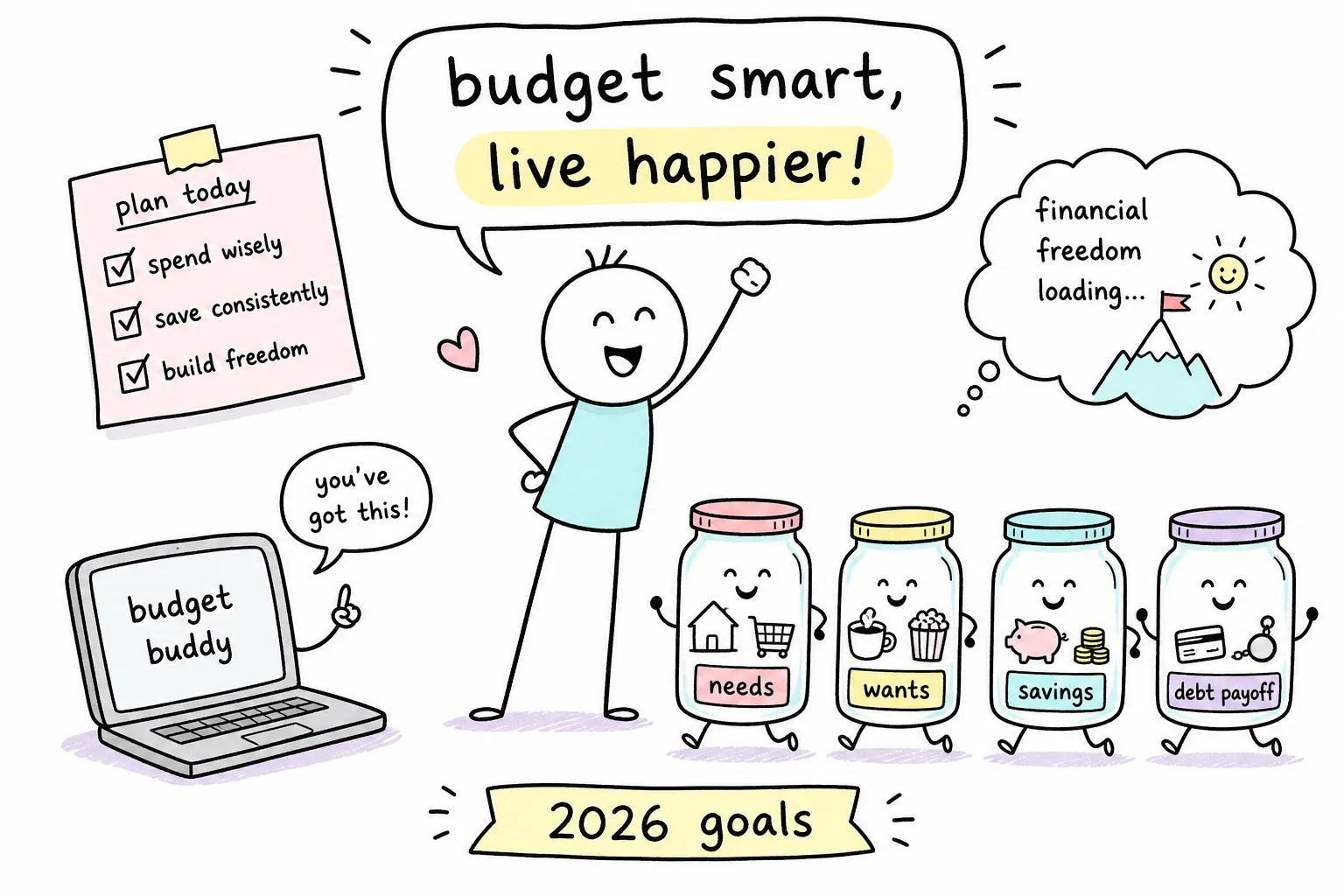
Finding the best budgeting methods for beginners in the US in 2026 starts with one insight: most people don't fail at budgeting because they lack discipline. They fail because they picked a method that doesn't match how they actually earn, spend, and live. That's not a character flaw, it's a design flaw. When you force yourself into a system built for someone else's life, it collapses the moment real life shows up.
Here at The Growth Engine, one pattern keeps repeating in our personal finance content: the readers who stick with a budget past the 90-day mark tend to share one thing in common. They chose the right system for their income type and their biggest financial pain point, not the most sophisticated one available. That's the matching problem this article solves.
Below, you'll find four of the most widely used beginner budgeting strategies: the 50/30/20 rule, zero-based budgeting, the envelope method (sometimes called cash stuffing in its digital form), and pay-yourself-first. Each section covers who it's built for, the real pros and cons, and a clear first-month setup. By the end, you'll know exactly which method fits your situation and which apps make it stick.
Why most budgets fail before the second month
A budget that looks perfect on paper but collapses by week three isn't a budgeting problem. It's a planning problem. Most beginner budgets fail for one of two reasons: they're built on guesses instead of real spending data, or they're so tight that a single unexpected expense blows the whole thing up. The goal isn't to build the perfect budget. The goal is to build one you'll actually run for 90 days straight.
According to Debt.com's 2026 budgeting survey, 48% of Americans are living paycheck to paycheck, and a CNBC/SurveyMonkey survey from July 2026 put that number even higher at 63%. Only about 22% of Americans currently use a dedicated budgeting app. That gap is exactly where choosing the right method changes the outcome.
The most common setup mistakes US beginners make
The first mistake is guessing at expenses from memory. Most people dramatically underestimate what they spend on groceries, dining out, and subscriptions. The fix is simple: pull your last two or three months of bank and credit card statements before you write a single budget number.
The second mistake is forgetting irregular costs. Annual subscriptions, car repairs, medical copays, holiday gifts, and quarterly insurance payments don't show up every month, but they will show up. Divide any annual or quarterly expense by 12 and include that amount as a monthly line item from day one. The third mistake is building a "perfect month" budget instead of a realistic one. Your first budget is a draft, not a commitment. Plan for your actual life, not the disciplined version of yourself you hope to become.
What to do before you pick any method
Before you choose a method, complete two steps. First, pull one to three months of actual bank and card statements and establish your real spending baselines by category, actual numbers, not estimates pulled from memory. Second, identify your primary financial goal right now: saving more consistently, stopping category-level overspending, or paying off debt faster. That goal should drive your method selection, because each approach solves a different core problem.
The 50/30/20 rule: the simplest framework to start with
The 50/30/20 rule divides your monthly take-home pay into three buckets: 50% for needs (rent, utilities, groceries, minimum debt payments), 30% for wants (dining out, entertainment, subscriptions, travel), and 20% for savings and debt payoff above the minimums. That's the whole system. No spreadsheets required, no transaction-by-transaction logging, and no category breakdowns within each bucket.
For the average U.S. household spending about $6,545 per month (per Bureau of Labor Statistics consumer expenditure data), housing alone runs about $2,189, roughly 33% of budget, and transportation adds another 17%. Those numbers align reasonably well with the 50/30/20 framework in mid-cost markets, where housing costs don't yet crowd out the wants and savings buckets. In high-cost cities, it gets complicated fast.
Who the 50/30/20 rule is built for
This method works best for salaried employees with predictable monthly income who have never formally budgeted before and want a guardrail without micromanagement. If you're starting from zero and need a framework that takes less than an hour to set up, 50/30/20 is your entry point. It builds the habit of looking at your money in buckets before you ever worry about individual categories.
Where it struggles: high-cost cities like New York, Los Angeles, and San Francisco, where rent alone can consume 40 to 50% of take-home pay. In those markets, a more realistic starting ratio is 60/20/20 or even 65/15/20, where needs take the larger share and wants absorb the compression. The 50% ceiling is structurally impossible for many households in expensive metros, so adapt the ratio around your actual fixed costs rather than forcing the classic split.
Pros, cons, and first-month setup
Pros: Extremely low maintenance, easy to understand, flexible within each bucket, and effective for building the broad habit of financial awareness without overwhelming a beginner. Cons: Too blunt for high-housing-cost markets, provides no protection against impulse spending within the "wants" bucket, and can mask overspending in specific categories while the bucket totals still look fine.
For your first month: calculate your take-home pay, sort last month's actual expenses into needs, wants, and savings, compare your real percentages to the 50/30/20 targets, and identify which one bucket is furthest off. Focus your attention there first. That's it. One bucket at a time.
Zero-based budgeting: assign every dollar a purpose
Zero-based budgeting operates on one defining rule: income minus all planned spending equals zero. Every dollar you earn gets assigned to a specific category before the month begins. Nothing floats. The method doesn't mean you spend everything, savings and debt payments are assigned categories just like rent and groceries. It means every dollar has a job before it lands in your account.
This is the most detailed of the four methods and the most powerful for anyone trying to aggressively pay off debt or eliminate overspending at the category level. When you build a zero-based budget, you can't hide from where your money actually goes, and that visibility is the whole point. It's also one of the top beginner budget techniques for variable-income earners who need a fresh plan each month based on what actually came in.
Who zero-based budgeting works best for
Zero-based budgeting is the right fit for people carrying debt who want a serious payoff plan, anyone who has tried a looser system and kept overspending, and freelancers or variable-income earners who need to plan each month individually based on actual income that month. It also suits detail-oriented people who feel more in control when they have full category-level visibility into their finances.
The honest tradeoff is time. This method requires consistent transaction tracking all month long and a fresh budget setup each month. During busy stretches of work or travel, that consistency is genuinely hard to maintain. If you're not willing to check in with your budget at least weekly, zero-based budgeting will feel like a burden rather than a tool.
Pros, cons, and first-month setup
Pros: Maximum accountability, savings and debt payments are planned line items rather than afterthoughts, highly customizable month to month, and it surfaces exactly where money is leaking. Cons: Time-intensive, requires consistent transaction tracking, harder to sustain during busy periods, and has a steeper learning curve than percentage-based systems.
For your first month: list all income sources with actual expected amounts, list every fixed expense (rent, car payment, insurance) and every variable expense (groceries, gas, dining, entertainment), then assign every remaining dollar to a category until income minus all allocations equals zero. Track your actual spending against the plan weekly and adjust as needed. The first month is always the roughest; the system gets faster once you have a realistic template to work from.
The envelope method: a hard stop for overspenders
The envelope method is the most tactile, behavior-driven approach of the four. The mechanic is simple: you pre-load cash into labeled envelopes for each spending category at the start of the month. When an envelope is empty, spending in that category stops. No exceptions, no transfers from other envelopes unless you consciously decide to reassign money and accept the trade-off.
Behavioral research on tangible spending limits consistently shows that physical or visually concrete constraints reduce impulse purchases more effectively than digital account balances. When you can see exactly how much is left in your grocery envelope, spending decisions become immediate and concrete in a way that a credit card balance rarely triggers. That friction is the whole point.
Who the envelope method is built for
This method is built for people who consistently blow their budget on groceries, dining out, or entertainment; visual learners who need a concrete spending limit they can actually see; and anyone who has tried apps but found them too easy to ignore or rationalize away. The envelope system works because the limit is physical and immediate, not buried in a dashboard you check once a week.
One important clarification for 2026: you don't need physical cash to use this method. Digital envelope apps, often called cash stuffing apps, replicate the same logic for people who pay most expenses online or prefer not to carry cash. The method adapts; the discipline principle stays the same.
Pros, cons, and how to adapt it for digital spending
Pros: Creates a hard cap on variable spending categories, makes trade-offs between categories immediate and visible, and is one of the most effective methods for breaking impulse spending patterns. Cons: Less convenient for automatic bill payments and subscriptions, requires consistent cash management or digital upkeep, and can feel cumbersome when income or expenses fluctuate significantly month to month.
For digital adaptation, Goodbudget replicates envelope logic in an app, making this method fully practical for people who pay most bills online. You set envelope amounts digitally, track spending against them, and get the same hard-cap discipline without managing physical cash. This is the most beginner-friendly version of the method for anyone with a mostly digital financial life.
Pay-yourself-first: automate saving before you spend
Pay-yourself-first is the least complex of the four methods and the best fit for anyone whose primary goal is building savings or investment habits from scratch. The entire mechanic: on payday, a set amount automatically moves to a savings or investment account before you see or touch it. What remains in your checking account is what you're allowed to spend for the month. No detailed category tracking required.
This approach works because it removes the decision from the equation. Most people who struggle to save don't lack the desire, they spend first and try to save whatever's left. Pay-yourself-first flips that sequence entirely.
Who the pay-yourself-first method is built for
This method works best for people whose primary goal is building an emergency fund or starting to invest, anyone who consistently "forgets" to save at the end of the month, and younger professionals who want to build saving habits without tracking every purchase. If your spending is generally reasonable and the problem is simply that savings never seem to happen, this method solves that specific problem with almost no ongoing effort.
It works best when paired with at least a loose spending awareness system, because pay-yourself-first doesn't protect against category-level overspending on its own. If you consistently overdraft or carry a credit card balance, this method alone won't solve that, you'll need to combine it with some category discipline.
Pros, cons, and how to automate it in the first week
Pros: Lowest friction of all four methods, savings happen before temptation arises, easy to automate with a bank transfer, builds strong long-term saving habits, and feels essentially painless after the first month or two. Cons: Doesn't solve category-level overspending, can leave accounts short if the automated transfer is set too aggressively, and provides no structure for people who also need day-to-day spending guidance.
For your first week: decide a specific savings amount in dollars, not a vague percentage. Open a separate savings account if you don't already have one, then set up an automatic transfer on your payday. Start with an amount that feels slightly uncomfortable but won't leave you short for bills. You can increase it after the first 30 days once you see how the remaining balance covers your actual expenses.
How to choose the best budgeting method for beginners in the US (2026)
After walking through all four systems, your decision really comes down to your income type, your primary financial goal, and how much time you're willing to spend on ongoing tracking. Here's the direct map.
Match your method to your income and financial goal
- Steady salaried income, never budgeted before: start with 50/30/20
- Carrying debt, want full category control: zero-based budgeting
- Consistent overspender in variable categories: envelope method
- Savings is your primary goal, low patience for tracking: pay-yourself-first
- Freelance or variable income: zero-based budgeting, planned fresh each month on actual income
Starting simple is always better than starting with the most thorough system. It's easier to add complexity to a system that's already working than to rescue one that's overwhelming and abandoned. Pick the method that fits your life right now, not the one that would fit your life if everything were ideal.
Signs you should switch methods (and when to do it)
There are three clear signals that it's time to change systems. First: you've followed a method for 90 days and still can't stay within your spending plan. The method isn't working for your behavior patterns; a different approach will serve you better. Second: the tracking burden has caused you to stop looking at your budget entirely. A budget you avoid is worse than no budget, because it creates false security. Simplify.
Third: your financial goal has shifted. If you've paid off your debt and zero-based budgeting served you well, you might now want the lighter structure of pay-yourself-first as you shift focus to investing. Switching methods isn't failure; it's your system growing with you. The budget is a living document, and so is the method behind it.
The best apps to pair with each budgeting method in 2026
The right app doesn't replace the method, it reduces the friction of running it consistently. Only about 22% of Americans currently use a dedicated budgeting app, and that low number largely explains why so many budgets get abandoned. Manual tracking is where good intentions go to die. Here's what to use for each approach.
Top app picks matched to each method
For the 50/30/20 rule, Quicken Simplifi (about $3.99 per month billed annually) is a strong beginner fit, widely recommended in app roundups from Forbes and NerdWallet, because it automates category tracking and supports savings goal monitoring without requiring manual entry. Rocket Money's free tier works well for quick setup if you're not ready to pay for an app.
For zero-based budgeting, YNAB (about $109 per year) is the gold standard because the entire platform is built around assigning every dollar intentionally. It comes with a steeper learning curve, but YNAB offers a 34-day free trial and a free year for verified college students. EveryDollar's free tier is a simpler entry point if YNAB feels like too much upfront.
For the envelope method, Goodbudget (free tier; about $80 per year for premium) is a clear beginner recommendation. CNBC has named it a top app for envelope-style budgeting, and its digital envelope structure makes the method practical for people with a fully digital financial life.
For pay-yourself-first, your bank's automatic transfer feature is genuinely all you need to start. Pair it with Empower (free) for net worth tracking and a high-level view of where your finances stand. If you want a free option across any method, Empower, Rocket Money's free tier, and Goodbudget's free tier all cover the core tracking needs without a subscription.
How The Growth Engine's personal finance section helps you stick to it
Choosing a method is step one. Building the habit of actually running it for 90 days is an entirely separate challenge, and that's where most beginners need the most support. The Growth Engine's personal finance section pairs these budgeting method guides with specific app setup walkthroughs, habit-building frameworks, and real-world templates you can use immediately.
Knowing which method fits your life and consistently executing it week after week are two different problems. The resource hub at The Growth Engine addresses both, because the point was never just to help you pick a system. The point is to help you run it long enough that it actually changes your financial situation. That's where the real work happens, and it's exactly what the content there is built around.
Start this week, adjust next month
The best budgeting methods for beginners in the US in 2026 aren't the most sophisticated ones, they're the ones that fit how you actually live, earn, and make spending decisions on an ordinary Tuesday. The 50/30/20 rule gives you a broad, low-maintenance structure. Zero-based budgeting gives you full dollar-level control. The envelope method creates hard category limits for overspenders. Pay-yourself-first automates savings before you ever see the money.
You don't need to get this perfect on the first try. What you do need is to make one decision right now: pick a method, pull last month's bank statement, and set up your first budget this week. Not next month, not after you read one more article. This week. Pick your method and start, 90 days from now, you'll have real data to work with instead of good intentions.
A budget isn't a test you pass or fail. It's a document you build, break, revise, and eventually stop thinking about because the habits it created have become automatic. Start with the simplest method that solves your biggest problem. Run it for 90 days. Then decide what to add or change from there.


Comments
Post a Comment