10 Fastest Ways to Make Money Blogging as a Beginner
10 Fastest Ways to Make Money Blogging as a Beginner
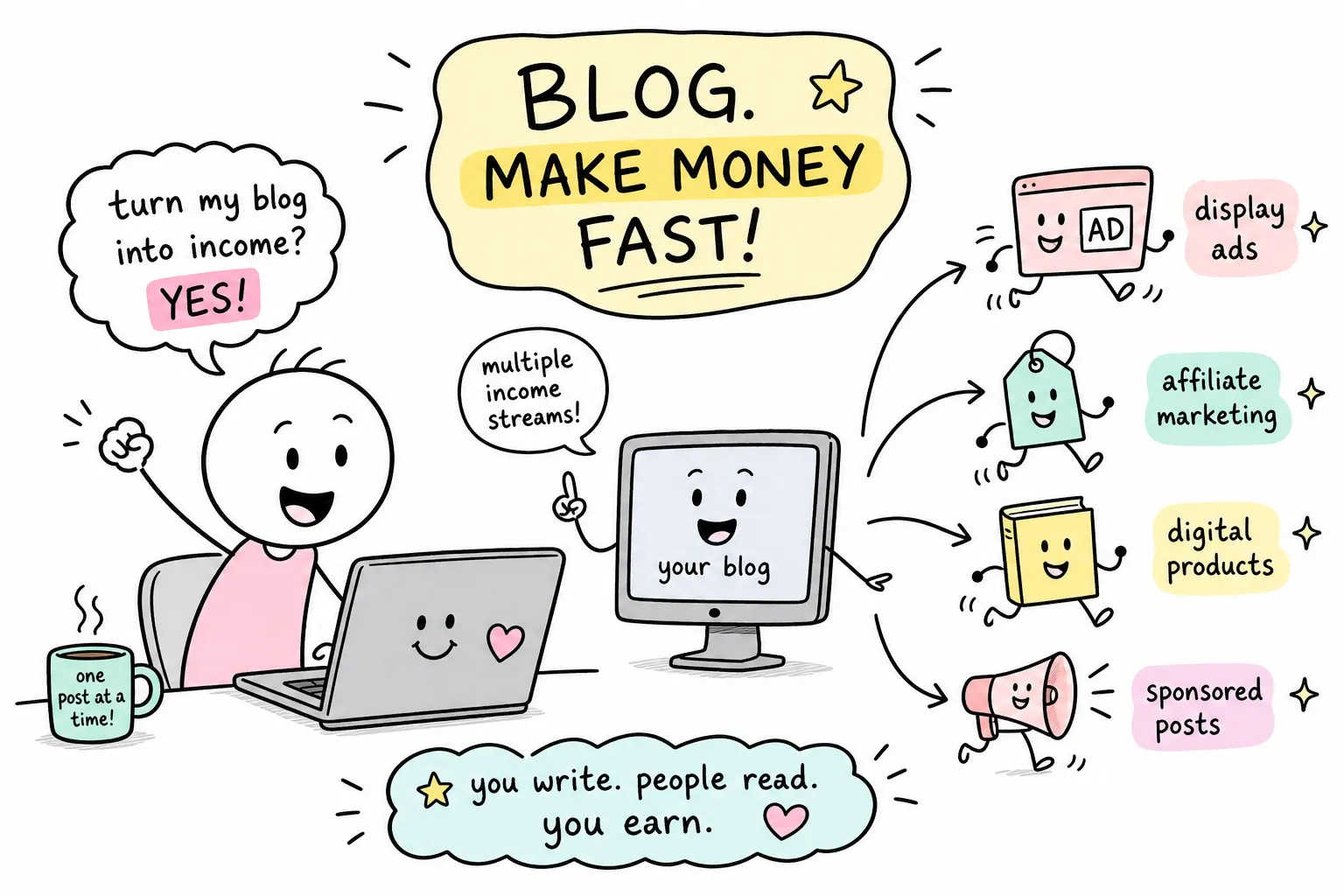
The fastest ways to make money from a blog as a beginner have almost nothing to do with pageview volume in the early months, and yet the most common advice new bloggers hear is still "grow your traffic first, then worry about money." That advice has delayed the first paycheck for thousands of bloggers who had everything they needed to earn from day one. The truth is that the fastest paths to blog income depend entirely on which monetization method you choose and when you activate it.
Display ads, the default choice for many beginners, are actually the slowest method available on a new site. A single service client or one affiliate commission from a well-targeted post can generate more revenue in week two than six months of display ads on a low-traffic blog. The hierarchy matters, and most beginner guides never explain it.
This guide ranks 10 real monetization methods by speed-to-income and ease of implementation, built from hands-on testing and the frameworks we teach at The Growth Engine. By the end, you'll know which method fits where you are right now, and what to do in the next 30 days to start earning.
The Speed-to-Income Ranking Most Beginners Never See
Not all monetization methods are created equal, and the order you pursue them matters enormously. Most new bloggers default to display ads because "passive income" sounds ideal, but ads are volume-dependent. They pay based on how many people visit your site, not how well you've matched an offer to a reader's need. That's a serious disadvantage when you're just starting out.
Why Starting With Ads Is the Most Common Beginner Mistake
Premium ad networks like Mediavine and Raptive require 50,000 or more monthly sessions before they'll approve you. Even Google AdSense, which has no official traffic minimum, produces very low RPMs at small scale. Starting with ads means waiting months or years for income that matters. Contrast that with a single client from a services page or one affiliate sale from a high-intent post, both of which can happen in week one if you set them up correctly.
The Five Tiers of Blog Monetization for Beginners (Fastest to Slowest)
The hierarchy works like this, from fastest to slowest for beginners: services and consulting first, affiliate marketing second, digital products third, email list monetization fourth, and sponsorships with display ads last. You don't need to pursue all five at once. Start at the top and add layers over time as your traffic and credibility grow. This is the core principle behind effective blog monetization for beginners, sequence matters as much as selection.
Fastest Ways to Make Money From a Blog as a Beginner: Methods 1, 3
Offering a service is the most underrated strategy in beginner blogging, and it's the one most people skip entirely. Your blog doesn't need readers to sell a service. It needs one credible page and one person who finds it useful. Services require no product inventory, no audience, and no waiting period. One client can pay more than months of display ad revenue combined.
What Services Beginner Bloggers Can Realistically Offer
The range of services that translate naturally from blogging skills is wider than most people realize. Freelance writing, proofreading, social media content, email copywriting, blog post editing, virtual assistant work, SEO audits, and Canva design are all accessible starting points. Your blog niche signals your area of expertise to potential clients. A personal finance blogger can offer budget coaching or spreadsheet setup. A productivity blogger can build Notion dashboards for clients. You don't need certifications, you need to solve a specific, defined problem for a specific type of person.
How to Set Up a "Work With Me" Page That Converts
A services page doesn't need to be elaborate. The anatomy of a simple, converting page looks like this: a clear headline that names the outcome you deliver (not just the task you complete), one or two specific offers with a price or starting range, a short credibility note explaining why you're qualified, and a contact form or booking link. This page can go live on day one and costs nothing to create. Your blog content works passively to funnel readers toward it over time.
Realistic Timeline and First Client Expectations
Most bloggers land their first client through direct outreach, not inbound traffic. Pitching in Facebook groups, Reddit threads, and LinkedIn is a realistic complement to your blog in the early months. A first paid project can happen within one to four weeks if you actively promote your offer rather than waiting for search traffic to arrive.
How to Monetize a Blog Quickly With Affiliate Marketing: Methods 4, 6
Affiliate marketing earns its reputation as one of the best beginner monetization methods, but only when it's done with intention. The problem is that most beginners write general informational posts and scatter affiliate links throughout without thinking about why someone is reading the post. Low-traffic blog monetization through affiliate links is entirely possible, but the content needs to be built around purchase decisions, not awareness topics.
How to Write High-Intent Content That Actually Converts
There's a clear difference between informational content ("what is X?") and buyer-intent content ("best X for Y," "X vs. Z," "how to set up X in 10 minutes"). High-intent posts attract readers who are already in decision mode. Even a blog with 200 monthly visitors can generate a commission if those 200 people are actively searching for a product comparison. A converting affiliate post leads with a clear recommendation, includes an honest comparison, and places a benefit-led call to action near the link. Conversion rates for strong buyer-intent pages typically run between 5 and 8 percent, compared to 1 to 4 percent for general content.
Best Affiliate Programs That Accept New Bloggers
Several programs are accessible to bloggers before traffic scales. Amazon Associates is the easiest entry point with broad product coverage across nearly every niche, though commissions are modest. ShareASale and Impact give you access to hundreds of merchants from a single account, which is useful when you're still testing which offers convert in your niche. Direct SaaS affiliate programs are often strong early earners because many care more about content quality and niche relevance than traffic volume, and they pay recurring commissions that compound over time.
Conversion Rates and First Commission Timelines
First commissions for beginners who publish intentional affiliate content typically arrive between weeks four and twelve. Most bloggers publishing three or more posts per month with deliberate link placement see their first $10 to $100 from affiliate links within two to six months. The six-month mark is the most realistic planning horizon for someone starting from zero, though focused execution in a low-competition niche can push that timeline earlier.
Methods 7, 8: Simple Digital Products You Can Launch in Weeks
Digital products sit in the third tier of the speed-to-income hierarchy, but they're faster to launch than most beginners expect. The mistake is overcomplicating the product concept. A 40-page ebook or a six-week course is not a beginner's first product. A Google Sheets budget tracker or a Canva template pack absolutely is. Simpler products sell faster, require less explanation, and can be created in days rather than months.
The Fastest Digital Products to Create in 1, 4 Weeks
These product types have the shortest production time and the lowest barrier to entry for new creators:
- Canva template packs: social posts, Pinterest pins, media kits, or content calendars
- Notion dashboards and planners: content trackers, goal planners, client management systems
- Google Sheets trackers: budget calculators, debt payoff planners, savings goal trackers
- Printable habit trackers, planners, and journals in PDF format
- Short niche-specific PDF guides: 10 to 20 pages focused on one specific problem
All of these can be built with free tools: Canva, Google Workspace, and Notion. The product creation phase realistically takes three to seven days for a first product when you focus on solving one specific, clear problem rather than trying to create something comprehensive.
Pricing and Where to Sell Your First Product
Three beginner pricing tiers work well for simple products: low-ticket at $5 to $15 for a single template or printable, mid-ticket at $19 to $49 for a template bundle or short guide, and bundle pricing at $79 to $150 for a multi-piece toolkit. For sales channels, Gumroad and Payhip are solid starting points for new creators, both are zero-upfront platforms that accept new sellers with no traffic requirements. Products can be embedded directly into relevant blog posts with a checkout link, turning every post into a passive sales page.
Method 9: Building and Monetizing Your Email List From Post One
An email list is not a slow-build strategy, even though it's often framed that way. It's an asset you can monetize independently of traffic, and it compounds in ways that pageviews don't. A list of 200 engaged subscribers can outperform a blog with 10,000 monthly visitors if the offer is right and the relationship is warm. The key is starting the list on day one, not after you've "grown enough."
Lead Magnets That Actually Get Sign-Ups on a New Blog
A lead magnet works when it solves one specific problem immediately. The formats that perform best for beginner blogs are short checklists, mini templates, one-page resource guides, and access to a curated resource library. Avoid long ebooks as lead magnets, they create download friction and readers rarely use them. Pair the lead magnet with a straightforward email tool: Kit (formerly ConvertKit), MailerLite, or Beehiiv for newsletter-style blogs. The entire setup takes one afternoon, and it should happen before your second post goes live.
How to Earn From a Small Email List
Two beginner-level monetization paths work well for small lists. First, promote a relevant affiliate product through a short welcome sequence tied to the lead magnet topic. If someone downloaded your "beginner budget checklist," a recommendation for a budgeting app with your affiliate link is a natural next step. Second, pitch your own digital product once you have one. A simple three-email sequence covering the problem, the solution, and the offer is enough to generate a first sale from a list of 100 people, provided the offer matches why they signed up.
Method 10: Display Ads and Micro-Sponsorships (The Patient Game)
Display ads belong on this list, but with honest framing. They're the lowest-effort method once traffic grows, and they're worth setting up eventually. For a new blog, though, they're the last method you should prioritize, not the first. Micro-sponsorships follow a different logic: niche fit matters more than raw traffic, which creates an opening for smaller blogs earlier than traditional ad networks allow.
Ad Networks That Accept New Blogs With Low or No Minimums
Google AdSense has no public traffic minimum and remains the most accessible mainstream entry point for new blogs. Ezoic works at around 1,000 monthly visitors through its Access Now program. Monetag and Adcash have no stated traffic requirements and offer $5 payout thresholds, making them functional for very early-stage sites. Monumetric becomes an option at roughly 5,000 to 10,000 monthly pageviews, and Mediavine's Journey tier opens at approximately 1,000 sessions per month. Realistic RPM expectations at small scale run between $3 and $10, which means meaningful ad income requires consistent traffic growth over many months.
When Micro-Sponsorships Make Sense for a Small Niche Blog
Micro-sponsorships work when your niche is specific enough that a brand prefers your 500 engaged readers over a general blog's 10,000 indifferent ones. A simple media kit with your niche summary, audience profile, and available deliverable options is all you need to pitch. Flat-fee sponsored posts, product mentions, and newsletter placements are all realistic options before your traffic scales. Lead with audience relevance, not pageview numbers.
Realistic Timelines for Your First $10 to $100 From Each Method
Setting clear expectations by method helps you stay consistent and avoid abandoning strategies that are working on their natural timeline. Most beginners earn $0 in month one from blog channels alone. That's normal, and it doesn't mean the strategy is wrong.
Weeks 1, 4: What's Realistically Possible Right Now
In the first month, two methods can produce income: services, if actively marketed through outreach, and digital products, if the blogger already has a warm audience from social media or another channel. Affiliate commissions in week one are rare unless the blogger is already generating traffic from another platform. Setting realistic expectations early matters because most income in month one comes from effort, not passive discovery.
Months 1, 6: Where Most First Dollars Actually Come From
Here's a realistic comparison across the five tiers, based on consistent publishing and intentional implementation:
- Services: first income in weeks 1, 4 with active outreach
- Affiliate marketing: first commissions typically in months 2, 6
- Digital products: first sales typically in months 2, 6 once the product is live and promoted
- Email list monetization: first revenue typically in months 3, 8
- Display ads: meaningful income typically begins at months 6, 12 or later
The pattern holds across the board: the methods that pay fastest are the ones that don't require traffic volume to function. Services and products sell based on intent and relevance. Ads and broad sponsorships sell based on scale. Start where scale isn't required and build toward it.
How to Pick the Right Method and Act on It This Week
The framework is clear, but clarity without a decision is just research. This section helps you choose one method that fits your current skills, your available time, and your blog niche, then commit to a 30-day implementation plan that actually moves the needle.
Three Questions That Point to Your Best Starting Method
Work through this self-selection framework honestly:
- Do you have a marketable skill you can sell as a service right now? If yes, start with a services page before anything else.
- Are you publishing or planning to publish content around specific product decisions in your niche? If yes, prioritize affiliate content from your first few posts.
- Do you have a specific, solvable problem in your niche that could become a one-page guide or template? If yes, launch a simple digital product within your first month.
Most beginners qualify for at least one of these within their first two weeks of blogging. Choose one, set it up completely, and prove the concept before layering in a second method.
Your 30-Day Monetization Starter Plan
Week one: Choose one method and build the infrastructure. That means a services page, an affiliate program application, or a product draft. Don't do all three.
Week two: Publish one piece of content that directly supports that method, a portfolio post, a high-intent affiliate comparison, or a product landing page.
Week three: Drive traffic to that content through Pinterest, SEO optimization, or sharing in relevant communities and forums.
Week four: Audit the results, follow up on any outreach, and plan your next supporting content piece.
The key is resisting the urge to set up everything at once. Bloggers who spread their energy across five monetization methods in month one rarely see results from any of them. One method, executed well, will teach you more in 30 days than five methods executed poorly will in six months. At The Growth Engine, we cover each of these strategies in dedicated, step-by-step guides so you don't have to stitch together advice from a dozen different sources to build a functional plan.
Start Earning Before Your Traffic Earns You Anything
The fastest ways to make money from a blog as a beginner all share one common trait: they don't require a large audience to work. Services can pay before your tenth post goes live. Affiliate links can convert from a 200-visitor month if the content targets the right search intent. A printable template can sell the same day it goes up, especially with a small social following pointing toward it.
The question was never "when will my traffic be high enough?" It was always "which method fits what I already have?" These are the fastest ways to make money from a blog as a beginner, and the 30-day plan above gives you a concrete place to start. Pick one method, follow the plan, and resist the pull to optimize everything before you've tested anything. Speed comes from focus, not from covering more ground.
Readers who want a full walkthrough on any of these strategies, including templates, checklists, and workflow guides, will find them at The Growth Engine. The resources there are built specifically for bloggers starting from zero who want a clear, actionable path to blog monetization for beginners, without the guesswork.
#BloggingTips #MakeMoneyBlogging #AffiliateMarketing #DigitalEntrepreneur #SmallBusinessGrowth


Comments
Post a Comment